

AI adoption fails when teams choose a delivery model that does not match their operating reality. At Axyz, we work with two models because the constraints of a regulated enterprise and a fast-moving small business are fundamentally different.
Why we use two modes
Some companies need a deeply documented transformation path before they can change anything in production. Others need measurable operational wins quickly, with minimal management overhead. Treating those environments as the same creates delay, risk, or both.
So we split delivery into two clear modes: consultancy and virtual team adoption.
Mode 1: Consultancy model
In consultancy mode, we act as an agency partner or embedded team to design a practical AI adoption program for the client business.
- Process analysis across departments and decision points.
- Documented AI adoption strategy and phased implementation roadmap.
- Privacy, security, and regulatory alignment across the target workflows.
- Clear ownership model for people, systems, and governance.
IT delivery in this mode: we produce a detailed implementation roadmap aligned to the customer's current IT landscape, including concrete technology stack choices, API and MCP integration contracts, data boundaries, and environment-level rollout sequence.
The implementation phase can then be executed either by the customer's internal team or by the Axyz Implementation team as a separate outsourcing project.
This is usually the right fit for larger organizations with regulator exposure, many internal dependencies, and higher change-control requirements.
Mode 2: Virtual team adoption
In virtual team mode, we analyze workflows and deploy AI-driven automations that take over repeatable employee tasks or workflow segments.
- Identify high-friction process segments with immediate automation potential.
- Design and deploy virtual roles with explicit inputs, outputs, and controls.
- Integrate the roles into day-to-day operations and measure real business effect.
- Expand role coverage iteratively once one lane proves value.
IT delivery in this mode: Axyz takes ownership of the technical infrastructure layer and delivers a ready-to-work virtual team in production, including operating documentation, access controls, and governance services for ongoing reliability.
This is often the best fit for smaller and mid-size businesses that need outcomes quickly and cannot run a heavy strategy program first.
Operating scheme
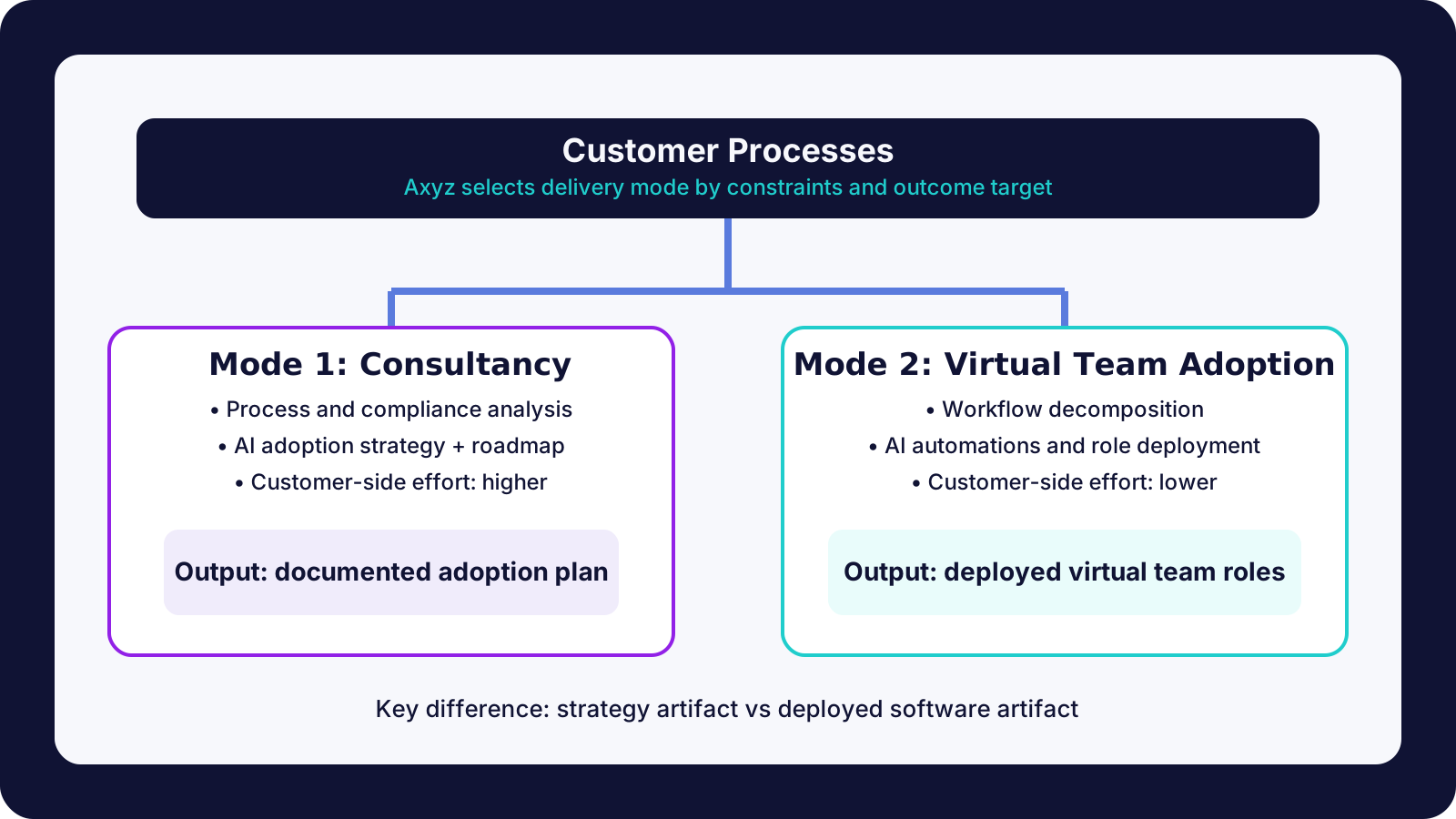
The scheme below shows how one starting point leads to two different delivery tracks and two different output artifacts.
The key difference
The consultancy model is closer to classic strategic consulting and usually requires more customer-side effort in alignment, documentation, and governance loops.
The virtual team model is closer to software delivery: the main artifact is not a plan document, but deployed virtual roles operating in real business flows.
If you had to pick one process to start tomorrow, would you begin with strategic readiness or with one deployed virtual role?