

An agent becomes useful when it can reach the systems where work actually happens: a CRM, a billing platform, a data warehouse, or an internal application. The integration boundary matters as much as the model.
The decision
There are two common ways to give an agent access to external data and actions:
- build a skill that calls the third-party API; or
- use an MCP server when the third party or your team provides one.
They are not simply competing protocols. A skill is a reusable implementation package. MCP is a governed, discoverable server boundary. The right choice depends on who owns the integration, how broadly it must be shared, and how much authorization and operational control it needs.
Skills + APIs: build the adapter you own
A skill wraps an API call in the format and guardrails expected by a particular agent environment. It can validate inputs, retrieve credentials through an approved gateway, call the vendor API, normalize the response, and return a safe result to the agent.
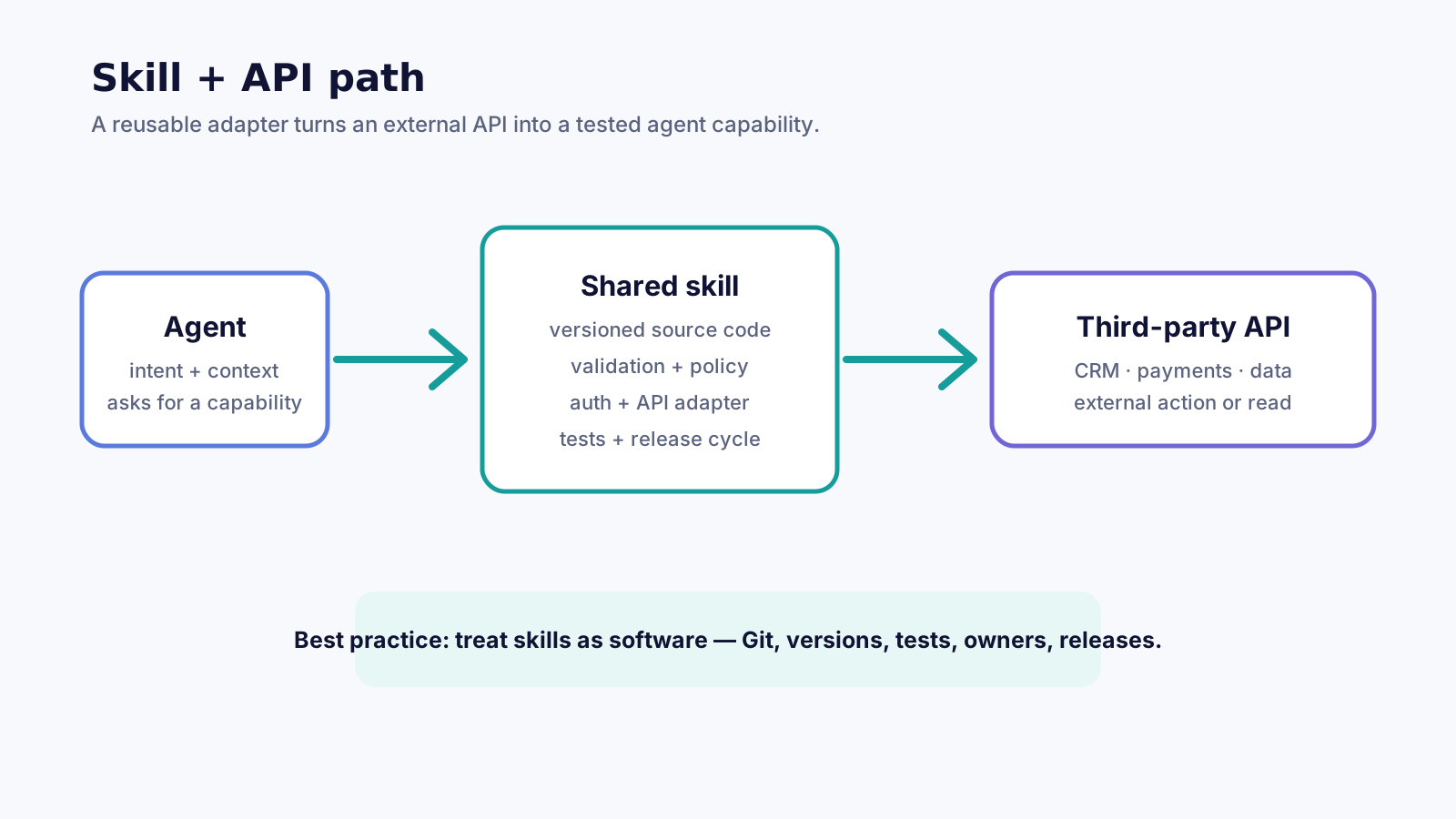
The important detail is that “skill” does not mean “prompt snippet.” Treat it as source code. Different agent environments may use different formats — for example, Claude skills and Codex skills are not automatically interchangeable — so a useful company library should define a cross-environment contract and provide the right packaging for each runtime.
- keep the integration in Git, with an owner and release history;
- version the skill independently from the agent that consumes it;
- test authentication, validation, retries, error mapping, and sensitive-output handling;
- document the capability, required permissions, inputs, outputs, and failure modes.
Sharing skills across a company
A skill becomes much more valuable when every agent and employee can reuse it. Two practical distribution models are common.
- Git-based library: keep shared skills in a dedicated repository. Teams can add that repository as a submodule or consume released versions from it, while pull requests provide review and change history.
- Built-in team library: use the shared skills library available in a Claude or Codex team plan when that is the most practical distribution path for your organization.
OpenClaw also supports cross-agent skills, which makes the same operational capability available across different agents instead of rebuilding it for each one.
MCP: use a curated and governed server
MCP is better understood as a curated, described, discoverable capability surface shared across authorized agents and users for a particular system or solution. It may be private to one company, customer, or tenant. Instead of every agent implementing its own API adapter, an MCP server publishes the tools and resources that the server owner chooses to expose.
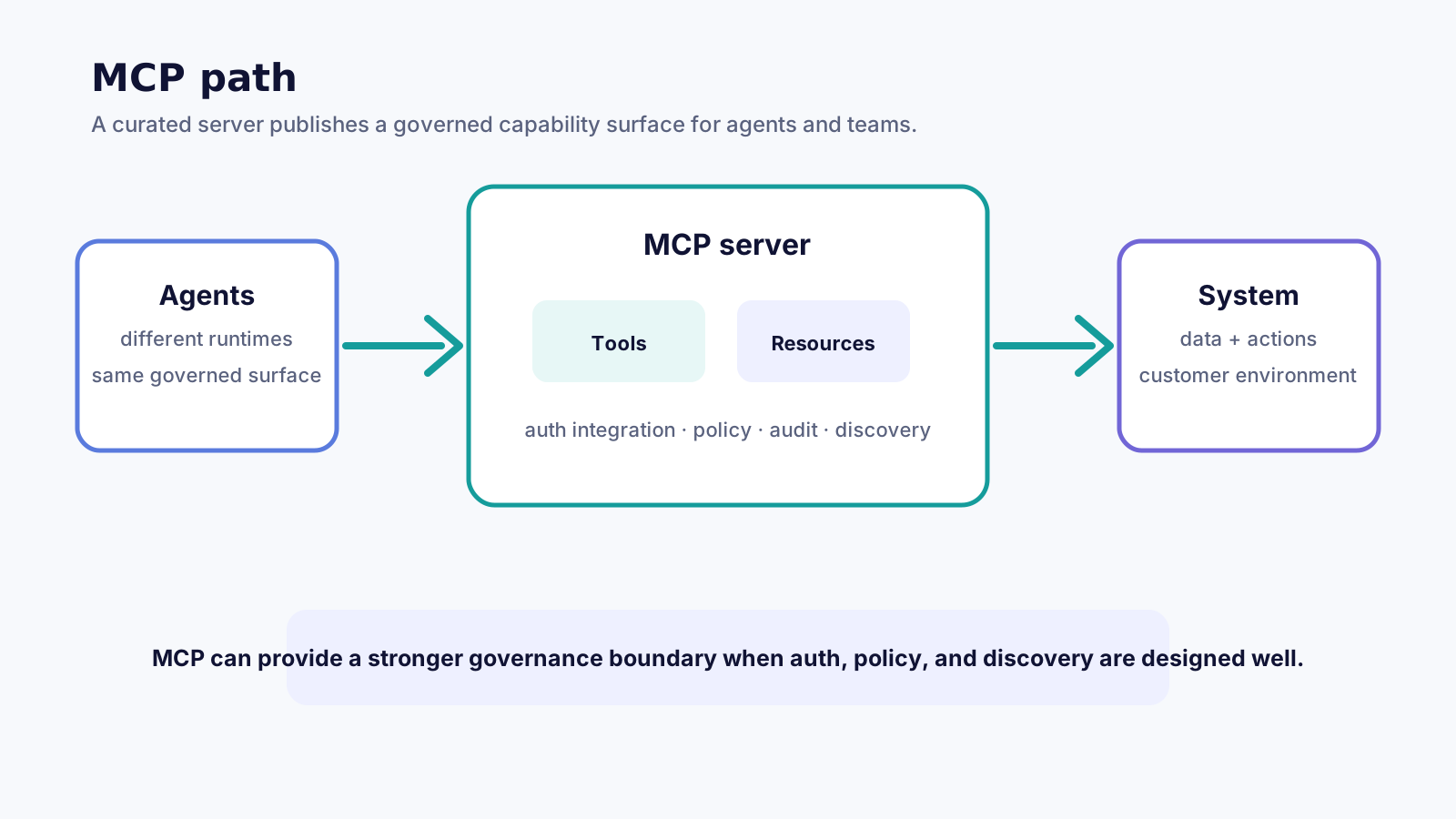
MCP provides a stronger foundation for centralized governance, but it does not provide RBAC automatically. MCP includes authorization mechanisms; roles, policy enforcement, tenancy, and audit are implemented by the server or by an external identity and policy layer. The maturity of a specific MCP solution therefore depends on how those pieces are designed and operated.
This does not make skills obsolete. Skills remain useful for local orchestration, environment-specific behavior, internal workflows, and APIs that do not have an MCP server. But when access must be shared, curated, permissioned, audited, and discoverable across many agents, MCP can provide the stronger boundary.
Skills and MCP together
Skills and MCP are not alternatives at the same level. A skill can call MCP tools, and an MCP server can use vendor APIs internally. In a real architecture, the decision is less about choosing one label and more about deciding:
- where orchestration and policy should live;
- who owns the integration boundary and its release cycle;
- how many agents, teams, and customers will consume it;
- which controls must be centralized versus kept close to one workflow.
How we use the distinction at Axyz
At Axyz, we build MCP servers for customers as a library of company skills — not just a connector to one system or one agent. The goal is to expose the right operational capabilities across the customer’s agent estate, with a clear authorization model and a boundary that can evolve without rewriting every consuming agent.
We will keep developing this topic in future posts: how to design MCP tool surfaces, how to map business roles to permissions, how to test integrations, and where a skill is still the better choice.
The operating economics matter
A technically elegant boundary can still be the wrong production choice if its operating cost or failure mode is unclear. Compare the full lifecycle, not only the initial integration effort:
- Latency: extra hops, authorization checks, and remote tool calls affect user experience and agent timeouts.
- Availability: define what happens when the server, vendor API, identity provider, or policy layer is degraded.
- Version compatibility: coordinate protocol, tool schema, vendor API, and consuming-agent changes.
- Blast radius: understand how a bad release or broad permission can affect every consumer.
- Support: assign ownership for incidents, upgrades, observability, rate limits, approvals, and audit evidence.
A practical boundary checklist
Before connecting an agent to an external system, ask:
- Who owns the integration and its release cycle?
- Does the capability need to be shared across agents and teams?
- Where will authorization, roles, policy enforcement, audit, and discovery be implemented?
- Where are credentials resolved, and how are sensitive outputs filtered?
- What automated tests prove that the boundary is safe and reliable?
- What are the latency, availability, compatibility, blast-radius, and support implications?
For your next integration, would you rather own a versioned API skill or consume a governed MCP server?